
Category: Uncategorized

  • Green Technology 2025: How Innovation is Fighting Climate Change

    Green Technology 2025: How Innovation is Fighting Climate Change

    Introduction

    The world is at a critical environmental crossroads. Rising global temperatures, melting glaciers, extreme weather events, and biodiversity loss have made the fight against climate change a top global priority. But while the challenges are immense, the solutions are rapidly emerging. By 2025, green technology innovations are driving one of the biggest transformations in human history—reshaping how we produce energy, consume resources, and live sustainably.

    From renewable energy systems and green transportation to circular economy models and AI-powered sustainability tools, technological innovation is leading the fight against climate change. Let’s explore how green technology in 2025 is reshaping industries, protecting the planet, and building a future where economic growth and environmental protection go hand in hand.


    1. Renewable Energy at the Forefront

    The most significant driver of green innovation is the global shift from fossil fuels to renewable energy.

    • Solar Power: Solar panels are now cheaper and more efficient than ever. In 2025, advances in perovskite solar cells are expected to push efficiency rates beyond 30%, making solar the most affordable energy source worldwide.
    • Wind Energy: Offshore wind farms, particularly floating turbines, are powering entire cities with clean electricity.
    • Hydropower and Tidal Energy: With better environmental safeguards, hydropower and ocean-based energy are becoming more sustainable.

    By 2025, the International Energy Agency (IEA) predicts that renewables will account for nearly 40% of global electricity production, drastically reducing carbon emissions.


    2. The Rise of Green Transportation

    Transportation is one of the largest contributors to greenhouse gas emissions, but green mobility solutions are reshaping the sector.

    • Electric Vehicles (EVs): By 2025, EVs are expected to represent nearly 30% of new car sales, thanks to falling battery prices and government incentives.
    • Hydrogen Fuel Cells: Particularly in heavy transport (trucks, ships, and airplanes), hydrogen is emerging as a clean alternative to diesel.
    • Smart Public Transit: AI-powered transportation systems are reducing traffic congestion and emissions in urban areas.

    The shift from gasoline-powered engines to clean mobility is not only helping the planet but also creating new jobs in the renewable and automotive sectors.


    3. Smart Cities and Sustainable Infrastructure

    Green technology is also revolutionizing the way we design and build cities. By 2025, smart cities are integrating technology to minimize waste, reduce emissions, and enhance energy efficiency.

    • Green Buildings: Equipped with AI-powered energy management systems, buildings can optimize heating, cooling, and lighting to minimize energy use.
    • Sustainable Materials: Innovations like carbon-neutral cement, bamboo composites, and recycled steel are replacing traditional high-emission materials.
    • IoT in Urban Planning: Internet of Things (IoT) devices monitor pollution, manage water usage, and optimize traffic in real time.

    These innovations make cities not just more livable but also eco-friendly powerhouses of the future.


    4. AI and Big Data for Climate Action

    Artificial Intelligence is proving to be a powerful ally in the fight against climate change.

    • Climate Modeling: AI analyzes massive climate data sets to predict natural disasters, helping governments prepare and protect communities.
    • Smart Agriculture: Machine learning optimizes water usage, soil management, and crop rotation, reducing food production’s carbon footprint.
    • Energy Grids: AI balances electricity supply and demand, integrating renewables more effectively into the power grid.

    By 2025, AI-powered climate tech will be central to reducing emissions and creating a sustainable balance between industry and the environment.


    5. Circular Economy and Waste Reduction

    Green technology isn’t just about creating new energy sources—it’s also about rethinking consumption and production. The circular economy model is becoming mainstream by 2025, reducing waste and reusing materials across industries.

    • Recycling 2.0: Advanced recycling methods break down plastics, metals, and textiles for reuse in new products.
    • Biodegradable Materials: Packaging made from algae, mushrooms, or plant-based polymers is replacing single-use plastics.
    • Waste-to-Energy Plants: Modern facilities convert household and industrial waste into usable energy with minimal emissions.

    This shift from a “take-make-dispose” model to a circular system is dramatically reducing the burden on landfills and natural ecosystems.


    6. Green Agriculture and Food Tech

    Food production accounts for nearly 25% of global emissions, but green technology is transforming agriculture into a more sustainable practice.

    • Vertical Farming: By 2025, urban vertical farms powered by renewable energy are producing food locally with minimal land and water use.
    • Precision Agriculture: Drones, sensors, and AI help farmers reduce water waste and fertilizer overuse.
    • Lab-Grown Meat: Cultured meat and plant-based proteins are reducing the environmental impact of traditional livestock farming.

    These innovations make food production more efficient, less polluting, and better aligned with climate goals.


    7. Energy Storage and Smart Grids

    One of the biggest challenges in renewable energy is storing excess power and distributing it efficiently. By 2025, advances in battery technology and energy grids are solving this problem.

    • Next-Generation Batteries: Solid-state batteries offer higher energy density, longer lifespans, and faster charging than traditional lithium-ion.
    • Hydrogen Storage: Excess renewable energy is stored as hydrogen, which can later be converted back into electricity.
    • Decentralized Grids: Smart microgrids allow communities to generate, store, and share clean power locally.

    This ensures renewable energy is reliable and available 24/7, reducing dependence on fossil fuels.


    8. Carbon Capture and Geoengineering

    While reducing emissions is critical, green technologies in 2025 also focus on removing existing carbon from the atmosphere.

    • Direct Air Capture (DAC): Machines pull CO₂ from the air and store it underground or reuse it in industrial processes.
    • Carbon-Neutral Fuels: Captured carbon is being turned into synthetic fuels for aviation and shipping.
    • Geoengineering: Research is exploring controlled climate interventions, such as solar reflection techniques, though these remain controversial.

    These solutions, combined with renewable energy, could help the world reach net-zero emissions targets faster.


    9. Global Collaboration and Policy Support

    Green technology alone cannot solve climate change—it needs government support and global cooperation. By 2025:

    • Carbon Pricing and Green Incentives encourage industries to adopt clean technologies.
    • International Agreements like the Paris Accord push nations to invest in sustainable development.
    • Public-Private Partnerships fund innovations in clean energy, agriculture, and transport.

    When policy, innovation, and business align, the impact of green technology becomes truly global.


    Conclusion

    By 2025, green technology is no longer an option—it is the backbone of humanity’s fight against climate change. From renewable energy and electric mobility to smart cities, AI-driven sustainability, and carbon capture, innovation is leading the charge toward a cleaner and more resilient world.

    The challenge is urgent, but the solutions are real. The future of our planet depends on how quickly we adopt and scale these technologies. With continued progress, 2025 could be remembered as the tipping point when technology and sustainability finally merged to protect our shared home—Earth.
  • How AI is Powering the Next Generation of Video Games

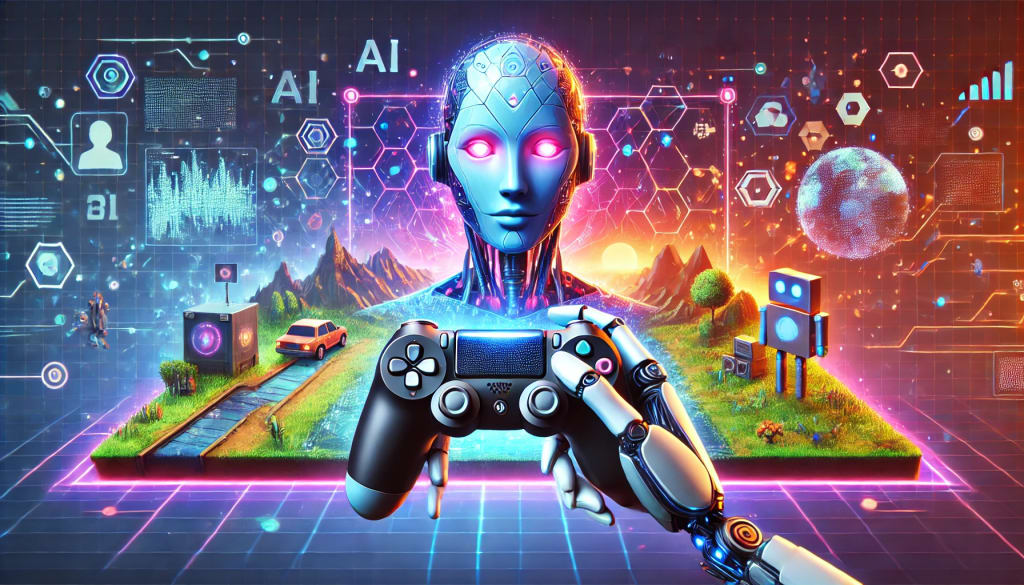
    How AI is Powering the Next Generation of Video Games

    Introduction

    The video game industry has always been a playground for technological innovation. From the pixelated adventures of the 1980s to today’s hyper-realistic open worlds, every era of gaming has been shaped by advancements in computing power and design. Now, Artificial Intelligence (AI) is emerging as the most transformative force in gaming’s evolution.

    In 2025, AI is no longer just about creating smarter enemies or realistic non-playable characters (NPCs). It powers procedural content generation, adaptive storytelling, personalized gameplay, realistic physics, and immersive virtual worlds. With global gaming revenue projected to surpass $300 billion by 2026, AI is playing a central role in shaping the future of interactive entertainment.


    1. Smarter and More Realistic NPCs

    One of the most visible ways AI is transforming gaming is through NPC behavior. In the past, NPCs often followed predictable scripts—attack, retreat, or repeat. Now, with machine learning models, NPCs can make dynamic decisions, respond to player actions, and even learn over time.

    • Example: In stealth-based games, AI enemies can now adapt to a player’s tactics—if you always hide in the shadows, they may start sweeping those areas more often.
    • Emotional AI: NPCs can express emotions based on in-game events, making interactions feel more human-like.

    This shift means players are no longer just playing against static code but against adaptive digital personalities.


    2. Procedural Content Generation (PCG)

    AI is revolutionizing game design itself through procedural content generation. Instead of designers manually creating every level, AI can generate infinite worlds, unique maps, and personalized missions.

    • Minecraft and No Man’s Sky already use algorithms for world-building, but in 2025, deep learning models generate landscapes, quests, and characters that feel handcrafted.
    • Indie studios benefit as well, using AI to create vast experiences without massive budgets.

    This not only saves time for developers but also provides endless replayability for gamers.


    3. Personalized Gaming Experiences

    AI is enabling personalized gameplay, where the game adapts to each player’s style, preferences, and skill level.

    • If a player struggles with combat, AI may subtly reduce enemy difficulty without lowering the overall challenge.
    • In narrative-driven games, AI tailors dialogue choices, branching storylines, and even character relationships based on the player’s decisions.
    • AI-driven matchmaking ensures fair competition in multiplayer games by analyzing player skills, behavior, and play history.

    This personalization creates immersive and inclusive experiences, keeping players engaged for longer.


    4. AI in Game Storytelling

    Storytelling in video games is entering a new era of interactivity. Instead of linear plots, AI can craft dynamic narratives that evolve in real-time.

    • Natural Language Processing (NLP): Games can now allow players to converse with NPCs naturally, with AI generating dialogue on the fly.
    • Adaptive Storylines: Instead of multiple pre-written endings, AI systems generate unique outcomes based on every choice a player makes.

    Imagine a role-playing game (RPG) where no two players experience the same storyline—that’s the promise AI is delivering in 2025.


    5. Hyper-Realistic Graphics and Animations

    AI-driven neural rendering techniques are pushing gaming graphics beyond traditional limitations.

    • AI Upscaling: Tools like NVIDIA’s DLSS (Deep Learning Super Sampling) enhance graphics by rendering at lower resolutions and using AI to upscale images without losing detail.
    • Facial Animation: AI can generate realistic facial expressions synced with voice lines, reducing the need for manual animation.
    • Physics Simulation: AI helps create lifelike water, fire, and weather effects that respond to player actions.

    This combination of AI + graphics ensures next-gen games are both visually stunning and more immersive.


    6. AI for Game Testing and Development

    Game development is costly and time-consuming, but AI is streamlining the process.

    • Automated Testing: AI bots can simulate thousands of gameplay scenarios, identifying bugs and glitches faster than human testers.
    • Level Design Assistance: AI tools suggest improvements for level balance, difficulty, and flow.
    • Animation and Sound Design: AI generates realistic animations and sound effects, cutting production time.

    This efficiency allows studios to release games faster while maintaining higher quality standards.


    7. Virtual Reality (VR) and Augmented Reality (AR) with AI

    AI is the backbone of VR and AR gaming experiences.

    • Spatial AI enhances motion tracking, allowing VR avatars to mimic real-life body movements more accurately.
    • AR AI Algorithms integrate digital objects into the physical world with precision, making mixed reality games seamless.
    • Immersion Boosters: AI-driven NPCs in VR worlds can interact naturally, making the player feel like part of the story.

    By 2025, AI ensures that VR and AR gaming is not just immersive but intelligent.


    8. Anti-Cheat and Security Systems

    Online multiplayer games face constant challenges with cheating and hacking. AI is playing a major role in ensuring fair play.

    • AI models detect suspicious player behaviors, such as aimbots or wallhacks, in real time.
    • Predictive algorithms analyze gaming patterns to identify and ban cheaters before they disrupt matches.
    • AI also safeguards in-game economies from fraudulent transactions and item duplication.

    This helps maintain trust and balance in competitive gaming ecosystems.


    9. AI-Powered Game Companions

    Beyond enemies and NPCs, AI is also powering in-game assistants and companions.

    • Imagine having a virtual AI teammate in a multiplayer game who adapts to your playstyle.
    • Single-player games can feature AI sidekicks that provide hints, solve puzzles, or even develop unique personalities based on interactions.

    Such companions bridge the gap between single-player immersion and multiplayer cooperation.


    10. The Future of AI in Gaming (2025 and Beyond)

    The next five years promise even more groundbreaking innovations:

    1. Fully AI-generated games – Worlds, stories, and mechanics created entirely by AI with minimal human input.
    2. Brain-Computer Interfaces (BCI) – Direct connections between the brain and game systems, enabling thought-controlled gameplay.
    3. Metaverse Integration – AI-driven avatars and environments powering shared digital universes.
    4. Ethical AI in Gaming – Balancing immersive gameplay with concerns about addiction, privacy, and player manipulation.

    The line between reality and gaming will continue to blur, creating experiences that are deeply personalized, dynamic, and limitless.


    Conclusion

    AI is not just an addition to video games—it is the driving force behind their next evolution. From smarter NPCs and personalized gameplay to infinite procedurally generated worlds and hyper-realistic graphics, AI is pushing the boundaries of what games can achieve.

    For players, this means more immersive, unpredictable, and emotionally engaging experiences. For developers, it offers new tools, efficiencies, and creative possibilities.

    As we look ahead, one thing is certain: AI will define the future of gaming, making it more intelligent, interactive, and immersive than ever before.

  • Hello world!

    Welcome to WordPress. This is your first post. Edit or delete it, then start writing!